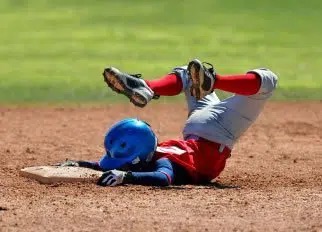
Sports injuries continue to rise, particularly among youth. According to Global Education, more than 3.5 million athletes under the age of 14 are treated for sports-related injuries every year. What is the cause of all of these injuries, and why are there more injuries today than about 10-15 years ago?
Dr. Jonathan Filipe is the former head athletic trainer and physical therapist for the Brooklyn Nets and New York City Football Club. Dr. Fillipe also has experience working with Team USA athletes training for the Olympics, competing in Tokyo and Beijing, so he has dealt with injuries that other physical therapists and athletic trainers might not have dealt with.
“When I was working in basketball specifically, there’s a lot of overuse in chronic things, so a lot of Achilles tendinitis, patella tendonitis. I would also see more of the traumatic side, so a lot of ankle sprains, and you get the occasional ACL tear or Achilles tendon rupture. Everywhere I have worked, everyone has dealt with lower back pain. That kind of never changes,” said Dr. Fillipe.
Dr. Fillipe now works as a physical therapist, where he applies his professional skills to his practice, Calibrate Physical Therapy. “I deal with the mostly athletic population here, so it’s traditionally some form of injury or discomfort that’s happening before becoming something worse. So looking at more from a preventative standpoint, just like general hip pain from something called femoral acetabular impingement or something underlying like labral tear or some type of knee discomfort that likely comes from some type of meniscus injury or something along those lines,” said Dr. Fillipe.
Another physical therapist who wanted to remain anonymous said, “Most injuries that I see are your typical knee sprains, ankle sprains, and shoulder injuries such as labral tears for athletes that play baseball, particularly those that pitch every five days. In little league there is a certain amount of pitches a pitcher can throw per game and per weekend, but it won’t necessarily prevent injuries.”
Fitness trainers, such as Pat Quinlan, have a goal to help individuals who want to improve their fitness and health. Aside from helping people reach their goals and beyond in the gym, he has prior experience working with athletes recovering from injuries and surgeries. Millions of people worldwide claim they want to get in shape or stay in shape. Quinlan says, “In shape is very subjective, but safe to say that most people, if not all, lack strength. Non-athletes alike. There’s a saying in the fitness/training/sports performance world that you can’t go wrong with getting strong, and it’s spot on,” said Quinlan. “You’ll usually carry more muscle, which has a host of benefits for body composition, functional ability for whatever smart/activity you participate in, and ultimately longevity and lifespan. Your body will be more resilient and typically suffer fewer injuries, and can bounce back from injuries when they do happen, faster and with better outcomes.”
According to the American Medical Association, “67.4% of UCL reconstruction surgeries were performed on athletes 16-20 years old”. One of the most common injuries that trainers and physical therapists have seen in athletes requiring surgical repair is Tommy John Surgery. “I worked primarily with baseball guys, so the most common injury I have experienced is a UCL tear. Tommy John is the famous surgery that repairs it. It’s a fairly common one now, and last I checked, it’s happening more commonly now as players are throwing harder without the prerequisite full-body strength to handle it,” Quinlan said.
“So if you’re a lacrosse player and you want to become the best lacrosse player in the world, like soccer or basketball actually crosses over pretty well and gives some of those offsets, some of the specific repetitive demands of the sport. And just now, you’re starting to see people go the opposite direction, where it’s like if you want to become a good lacrosse player, you show some hope and start playing competitive lacrosse. And that’s even more prevalent in baseball specifically, like just being in that world, like the repetition and the specific room, especially for pitchers, like you’re just doing that over and over and over again. The ability or conditioning from other aspects of athleticism, and people are getting specialized super early and end up with overuse injuries within the shoulder, like flexor tendon tendinopathies, which then result in UCL ruptures, shoulder labral tears, and rotator cuff tears, etcetera”, said Fillipe.
Social Media has been on the rise amongst the youth. Children and teenagers are active on social media platforms such as TikTok, Instagram, Snapchat, and X. However, TikTok is the most common platform on which teenagers promote themselves for their performance in the field. Is Social Media the cause of sports injuries?
“Kids are posting highlight reels while also having their parents go on TikTok live to film their games. It is something that children believe will help them land a full scholarship to college. It added pressure to the young athletes. Once they take the mound to pitch, they will throw as hard as they can to the point that it will cause injuries because they might think their future college coach is watching their TikTok live,” said the anonymous physical therapist.
Quinlan says, “I don’t know if it’s a direct or indirect cause, but social media plays a role in everything, so I’d say it does have a role in more injuries at younger ages. I think it has more to do with early specialization in one sport. Kids that go all in on their one sport typically play year-round, go to showcases and combines all over the place, so their bodies are 1) Not getting rest, both physically or mentally. A lot of kids either get hurt or burn out, or both. 2) They’re not getting enough movement variability, which again leads to injury. Their bodies get good at that one spot, but they don’t get to develop other abilities, which would help in terms of being a better overall athlete.”
While Quinlan and the anonymous physical therapist believe that social media contributes to injuries, Dr. Fillipe feels that social media benefits young athletes. Filipe says, “I support social media. I think it’s cool that they have a place to advocate for themselves, as I feel that 15 to 20 years ago was a lot more difficult to showcase yourself, especially if you were from a smaller school or a more rural area. And on social media, a lot of these, like online, like video, like huddle, and stuff like that, have really kind of allowed people to essentially have more of a fair playing ground and opportunity.”
Common sports injuries occur in young athletes every day. Do you think social media is the overall cause of injuries? Or do you think young athletes are generally overworked each time they take the field or the court?
 Jason Hochberg